It started, as these things often do, with a tiny spark of inspiration. I was looking at the way Unicode builds those racially diverse family emoji. These use ZWJ sequences to glue together adults, children, and skin‑tone modifiers into a single little glyph. It’s clever, constrained, and surprisingly elegant. It gave me an idea.
What if you could do the same thing for flags? Unicode already has national flag emojis along with 🏳️🌈, 🏳️⚧️, 🏴☠️, 🏁,🏳️,🏴,🚩 and the countries-in-our-hearts, 🏴, 🏴, 🏴. But no more. The people in charge of assigning codes have decided this is too much of a geopolitical and culture-war nightmare so these are all the flags we’re going to get.
It was with this and the build-a-family codes that gave me the idea. A minimal system. A harmless system that would allow Unicode to avoid the minefield.
Famous last words.
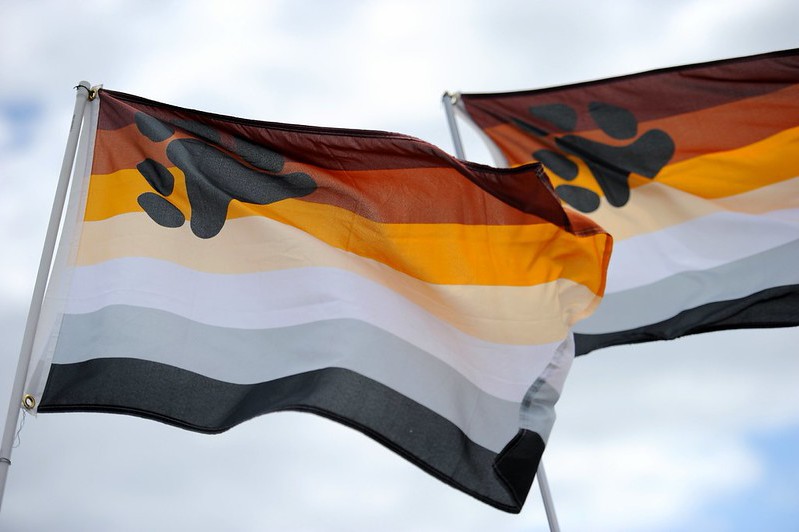
Just Horizontal Stripes. How Hard Could It Be?
My starting point was beautifully simple. We already have colourful square emojis, so put several in a row with a code that says “take those colours and turn them into a striped flag.”
Want to identify with the British suffragettes? No problem. Type “🟩⬜🟪” and an end marker and you’ll get the classic “Give Women Votes” banner.
That’s it. No more than six stripes. No fancy geometry. No overlays. No heraldry. Just a neat little way to express the British suffragette flag without needing a bespoke emoji or any of the political minefield that would come with it.
It felt clean. It felt doable. It felt like something Unicode might actually consider.
But I wasn’t done.
“We’re just like you, only differently inclined.”
Most pride flags are horizontal stripes, but many flags prefer vertical stripe ls a d this this seemed like a very simple extension to the idea. Two new code points. One for horizontal stripes and another for vertical stripes.
Still simple. Still manageable. Still not terrifying.
“I am making little watercolors and pastels, I think they will come out all right.”
The trans pride flag doesn’t use red and blue, but pink and baby-blue. Pastel shades. While the trans flag was already there, anyone wanting to use the trans colours would need to make do with bright-red and bright-blue.
But I’m already inventing new code points, so why not add one more. A pastel modifier that you could attach to any of the colour emojis, even outside of my primary flag composition plan. “💚” and the pastel modifier equalled a pastel-green heart.
This was the moment I should have stopped. I had taken the first step toward a graphics language, but I didn’t see it yet.

Crosses, Saltires, and Cantons
Once you start thinking about flags, you can’t avoid the classics. The Nordic cross, St Andrew’s saltire, America’s star-spangled canton, the British layered geometry.
So I added codes that allowed you add various kinds of crosses, each with a colour, and a canton code that meant “this block is a new flag that will be embedded in the top left”.
Some flags have heraldic symbols on them like stars or animals. I was never shooting for pixel perfect representations, so I added codes that would allow you to add an emoji to your flag in a variety of positions.
Flag of 🇦🇺 Australia?
- Blue stripe.
- Southern Cross emoji on the fly.
- White star emoji on the lower hoist.
- Start Canton.
- Blue Stripe.
- White Saltire.
- Red Saltire.
- White Cross.
- Red Cross.
- End Canton.
And suddenly my simple stripe system needed rules for layering, masking, and region‑specific drawing.
The Moment of Realisation
I stepped back and looked at what I had created. Orientation rules, layering rules, colour‑modification rules, region‑placement rules, geometry rules, compositing rules, rule rules…
And it hit me with the force of a thousand W3C specifications. I was reinventing SVG. In codepoints. Not just SVG but a restricted, weirdly encoded, Unicode‑flavoured SVG with all the complexity and none of the tooling.
I had built a graphics language disguised as emoji. Unicode would never accept it. Unicode encodes meaning, not appearance. The moment you introduce a system that generates arbitrary graphics, you’ve left the world of characters and entered the world of graphics engines.
I had crossed the boundary from symbol encoding into procedural graphics, and I hadn’t even noticed until I was halfway through designing a colour‑modifier block.
My original idea — the tiny, innocent, three‑stripe suffragette flag — was lovely, but ideas like this have a way of expanding. You add one rule, then another, then another, and before you know it you’re writing a miniature graphics specification and wondering why your “simple emoji idea” now needs a colour‑space definition and a geometry engine.
Unicode didn’t ask for SVG‑Lite‑But‑Worse. I just accidentally built it.
Honestly, it was a fun ride.
Credits
📸 “Marche des fiertés Toulouse 2011” by Guillaume Paumier. (Creative Commons)
📸 “Statue in the ground of Tenison Woods Catholic College in Mt Gambier” by “denisbin”. (Creative Commons)